Coping with Climate Anxiety: Empower Your Actions

Feeling anxious and desperate on environmental issues, disasters going on around you? What about feeling grief, mourning, fear or stress?
You are not alone. We’re facing a new challenging era creating its own troubles such as climate anxiety, vicarious trauma and pre-traumatic stress…
The first climate suicide
David Buckle, a climate activist and civil rights attorney, immolated himself using gasoline in 2018. In his suicide note, he stated that ending his life was a representation. It showed what we’re all doing to ourselves by relying on fossil fuels.
This was unfortunately the first ‘climate suicide’ in the United States. This signaled a new intensity in the emotional register of climate change advocacy.
The Climate Generation
Environmentalism, climate change, and global warming are not new topics for the world to discuss. It is clear that Y, Z, and future generations will live in an era more shaped around these facts.
And obviously, this ‘climate generation’ will be much more vulnerable to psychological effects specific to climate change. These effects include pre-traumatic stress disorder and eco-grief. There are also attendant ills.
These forms of anxiety lead to a feeling of dread about the future. There is also a feeling of powerlessness to do anything to live and shape that future. Coping with the facts of these and acting accordingly will be vital.
‘I’m too powerless to act’ – Really?
You may have grand ambitions and dreams as a respectful human being: To create a better world, to help your community, to act against climate change, to prevent the most horrible wildfires in your country…
But the scale and scope of these tasks may make you feel small. You might feel weak and defeated before even starting to try. These sensations may be worsened by the “imposter syndrome.” This is the feeling that you’re not qualified to do anything meaningful in the first place.
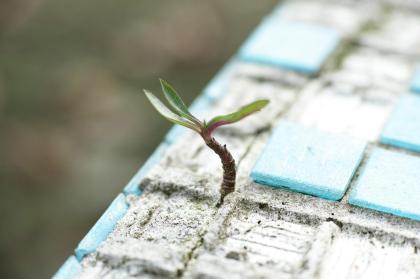
To be a change agent, you don’t need spectacular results. When you’re feeling demoralized, remind yourself of Adrienne Maree Brown’s tenet of emergent strategy: “Small is good, small is all. First, we need to believe that our individual involvement is worthwhile.”
The bigger the problem, the less fixable it seems, and so the more likely we are to do nothing instead of something. We are finished before we even start. To fix this, we need to actively combat messages that say the problem is too big. We should remind ourselves that small is all. Small is enough.
Negative emotions arise when we know we cannot fix these issues. These emotions will reduce any positive emotions we might induce by doing some smaller action. The very scale of the problem makes people not want to do anything about it. Considering climate stories through this lens, it is surprising. Many climate change advocates still rely on the sky-is-falling approach to get people to care about climate change.
Don’t wait for a Hero!
Our minds intuitively seek negativity, news outlets leverage this susceptibility. And as a result, we act and live from an orientation of fear. When our worst nightmares seem to be coming true, we may want to hide our heads in the sand. We might reject our responsibility. We might ignore our power.
Environmental Anxiety Then, we wait for a hero to come to fight against the villains. This pathetic expectancy creates a loop of despair and powerless…
Progress is good, even its imperfect
Start influencing the very first person near you. Find leverage points. Go over with your networks, families, workers, co-workers. Influence them that we can all put good use in our fight against climate change, deforestration, global warming, plastic pollution…
This is not a ‘positive thinking’ non-sense approach. On the contrary, a very pragmatic method.
Follow the reputable sources, not the social-media monkeys; learn, increase your knowledge and awareness. Begin to change your daily practices into eco-living and consumption. And start to influence your network.
When you begin to see all the people with whom you have reciprocal relationships, you realize your daily interactions. You can recognize the ways that you already have a significant amount of power to influence. An individual power creating a snowball that nobody can ignore, even the government and the legislation…
You will not maybe over-come your anxiety, yet this process may increase your anger day by day. But at least, you’ll start to create a difference. Environmental Anxiety
Don’t forget: ‘Small is good. Small is all.’
So, #ActNow.
Source: A Field Guide to Climate Anxiety: How to Keep Your Cool on a Warming Planet, Sarah Jaquette Ray
İlgili yazılar
 İklim & Sistemler · 21 Şub 2026
Sustainability Industry: Profiting from Crisis
The sustainability industry expands as the crisis deepens, turning systemic failure into measurable, manageable processes. Instead of eliminating unsustainability, it often sustains it—rewarding reporting over results, complexity over clari
 İklim & Sistemler · 16 Eyl 2025
Greenwashing: The Trojan Horse of Climate Action
The future of the climate fight will be decided by trust. “Net zero.” “Carbon neutral.” “A green future.”…
 İklim & Sistemler · 8 Tem 2025
Redefining the Human-Nature Relationship: A New Contract for Sustainability
Sustainability isn’t just about technology or efficiency—it’s a moral reckoning. True change begins when we redefine our relationship with nature as one of respect, not control.